// Shipped · 2025
Microfarm prototype & anemometer
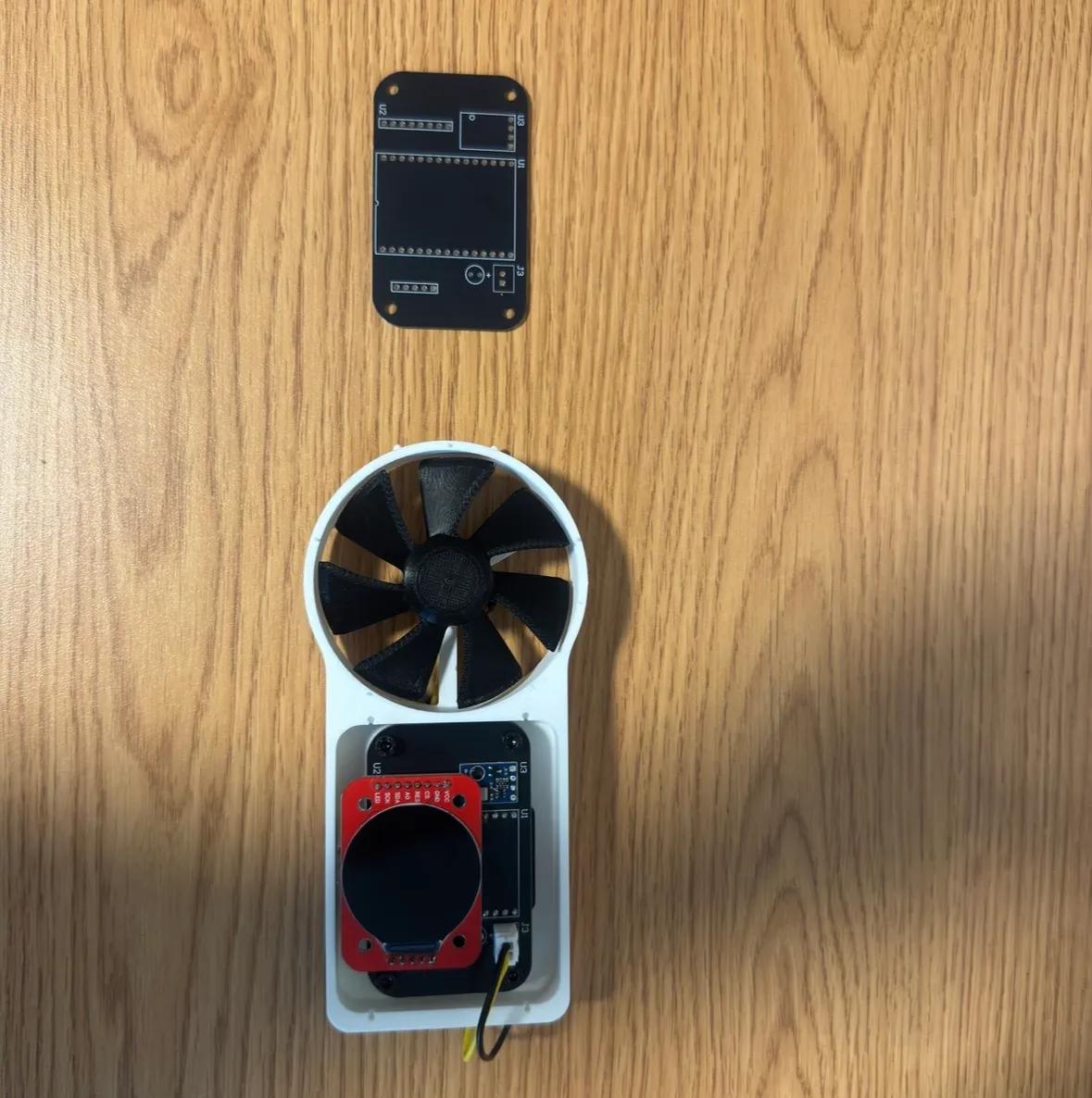
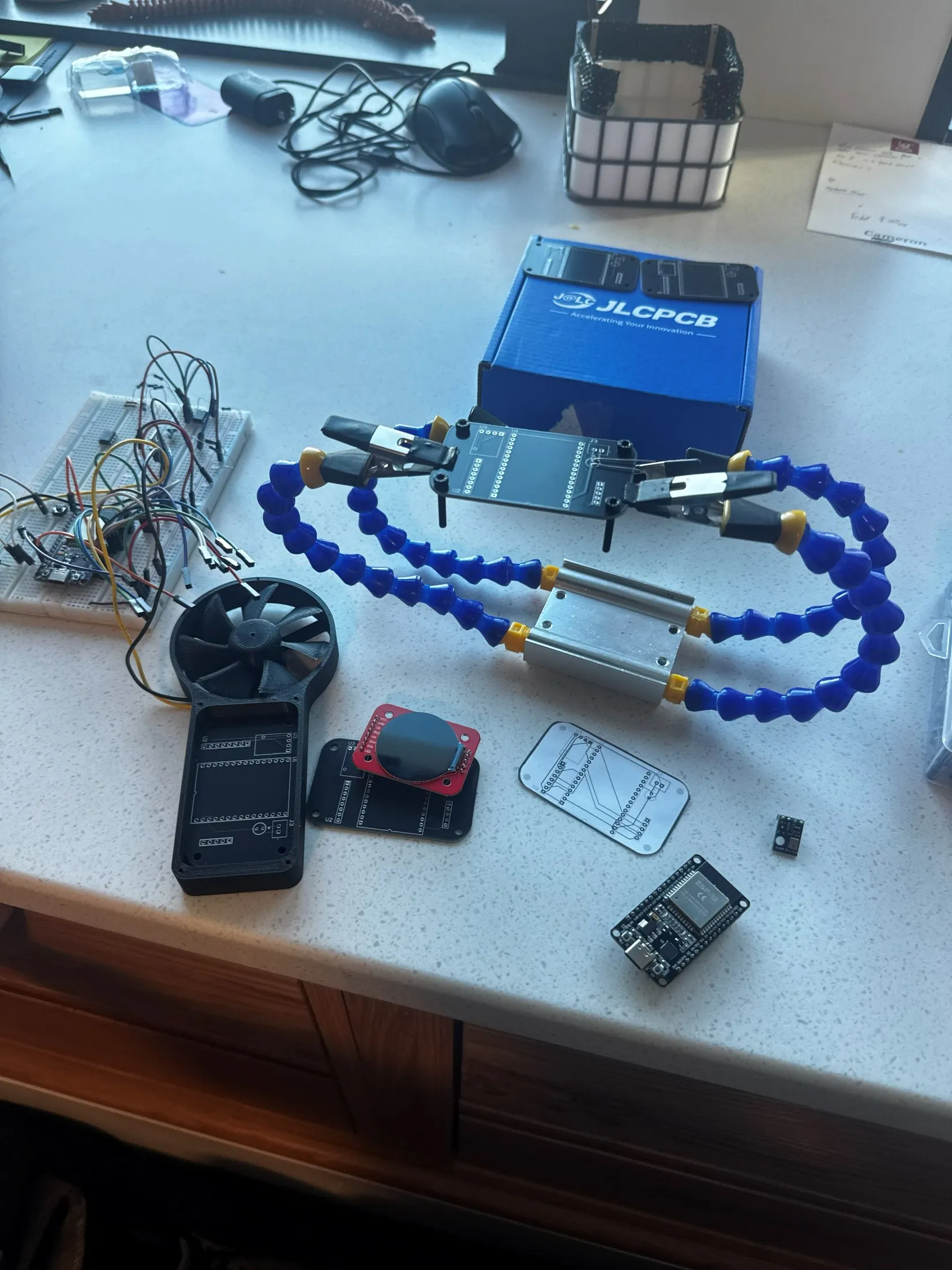
A first-year ENED team project for the Pine Ridge Reservation — a 3D-printed microfarm that breaks the wind for a small garden. I did the CAD and printing and built the test rig, including an anemometer I made from scratch (my own Altium board and a printed impeller) to measure how much the wind dropped inside.
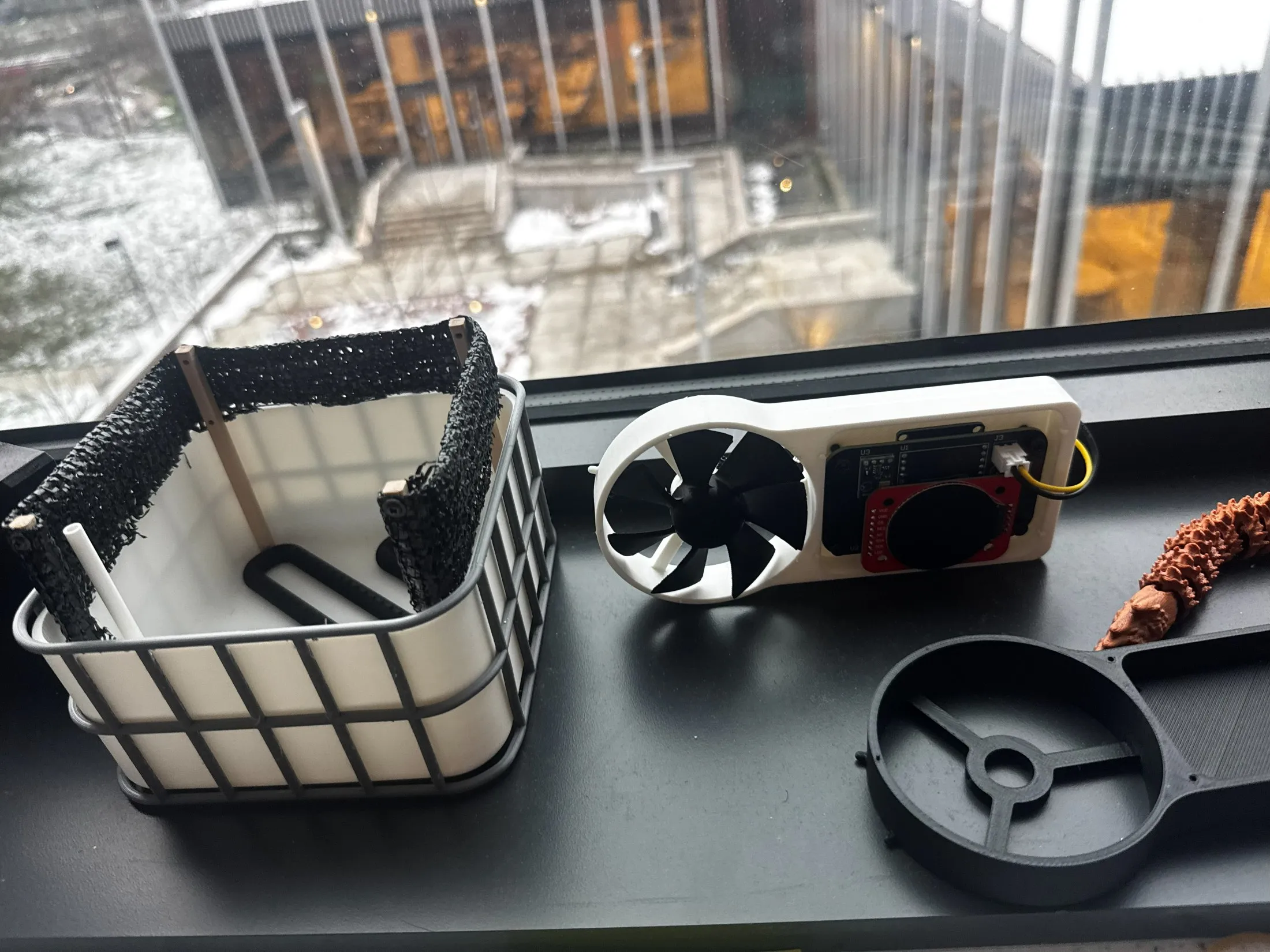
What it is
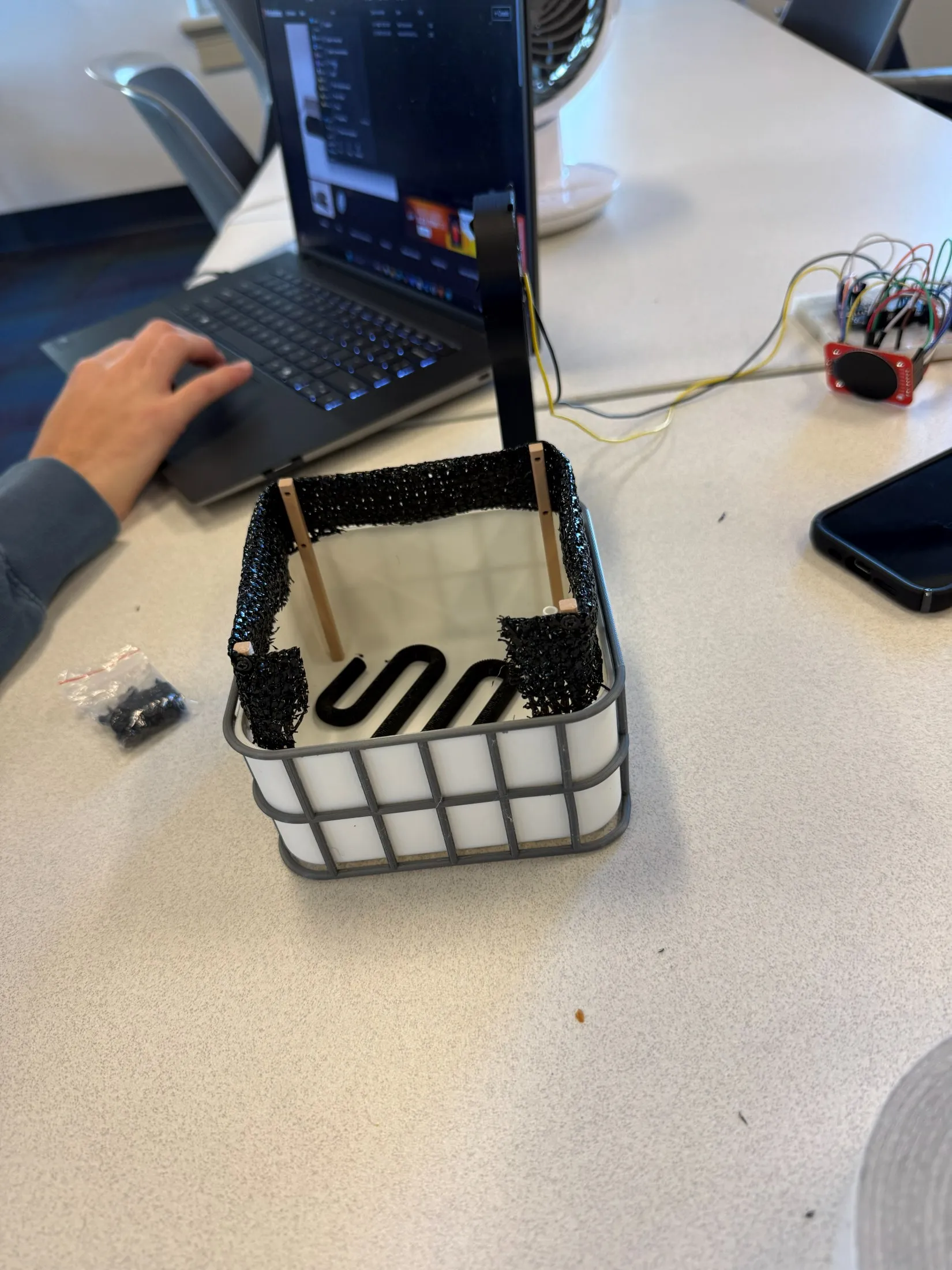
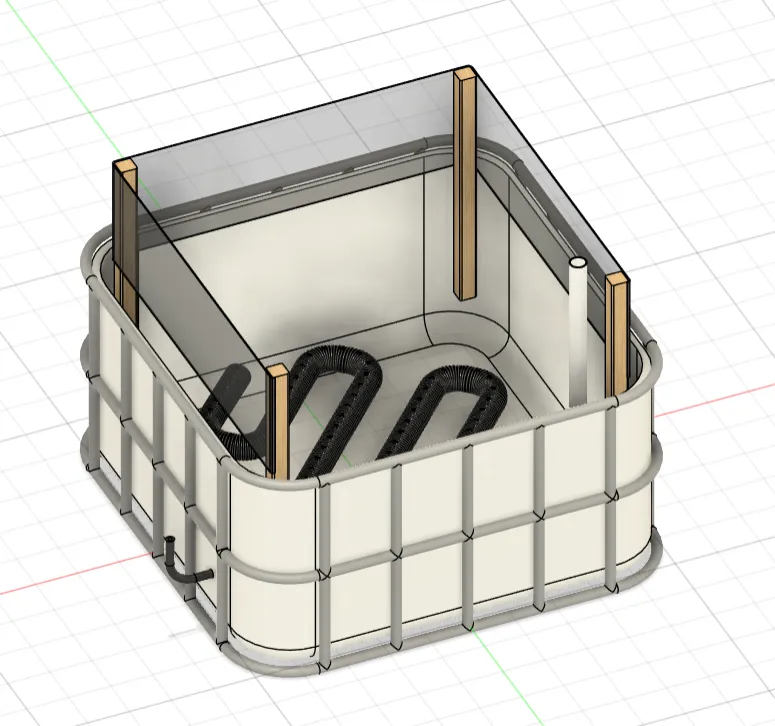
A first-year design project (ENED 1100). Our team was assigned the Pine Ridge Reservation, where thin soil and constant wind make it hard to keep a small garden alive. We landed on a microfarm — a small enclosed planter that blocks the wind and holds the soil in place. To see whether the idea held up, I printed it at 1/10 scale.
My part
It was a group project. I took the physical build and the electronics — I modelled the microfarm and the test hardware in Fusion 360, printed the prototype, and put together the rig we used to find out whether the enclosure actually cut the wind.
The anemometer
The whole idea hinges on one question: does the structure really slow the wind down where the plants sit? To answer it I needed a wind reading, so I built my own anemometer instead of buying one.
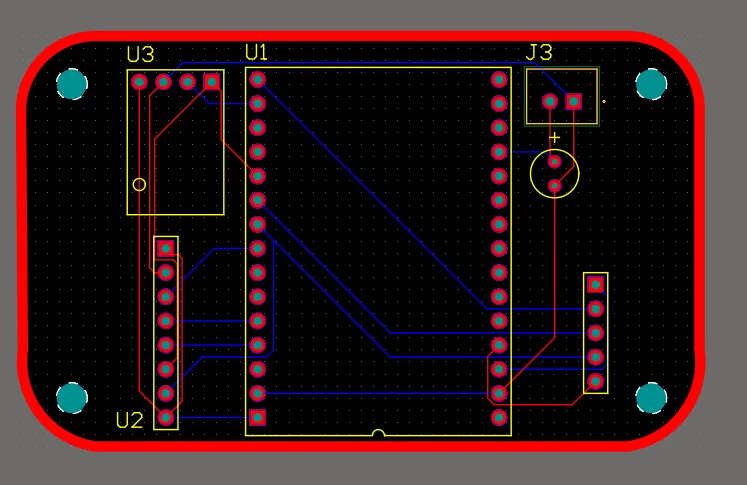
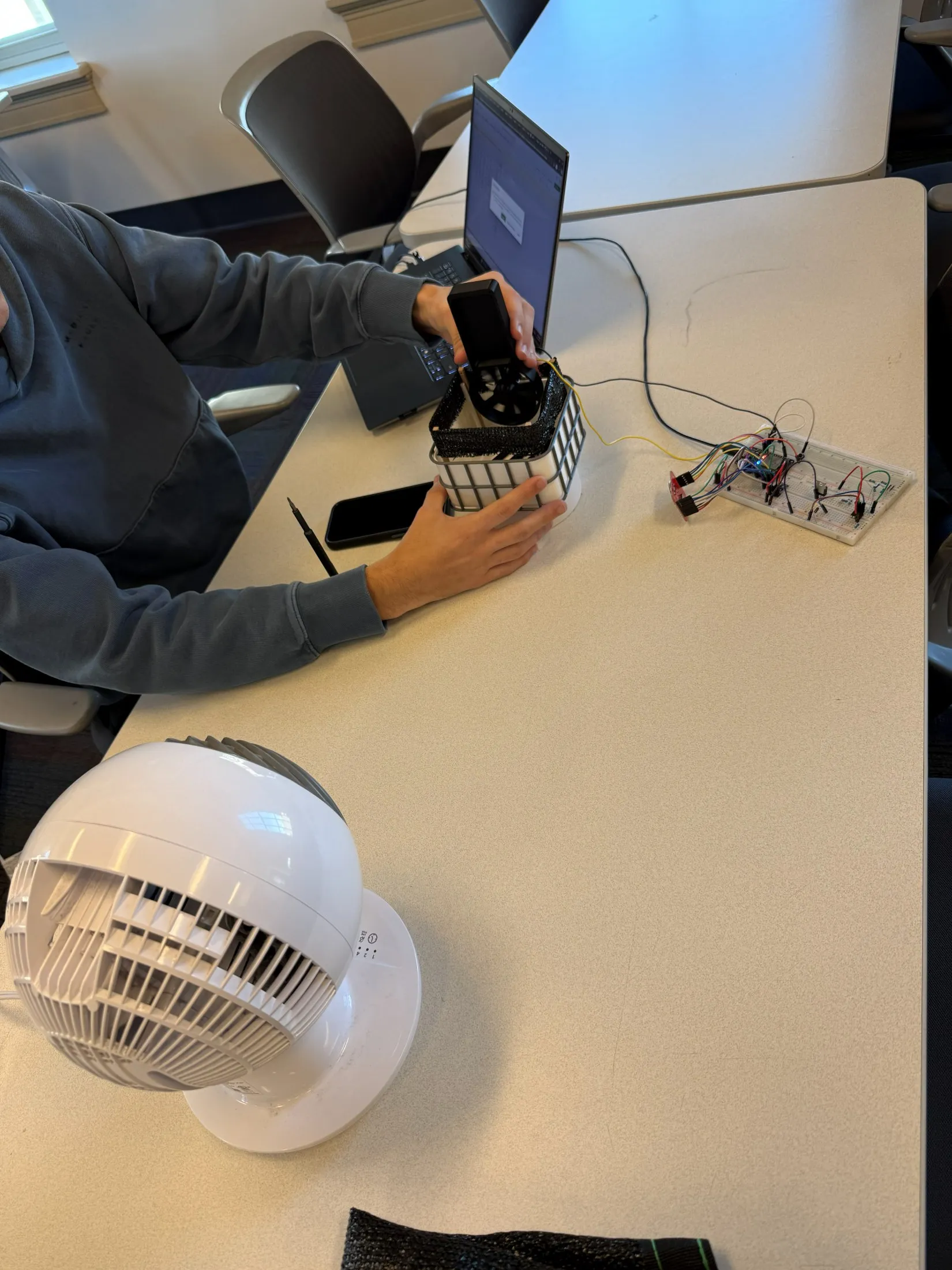
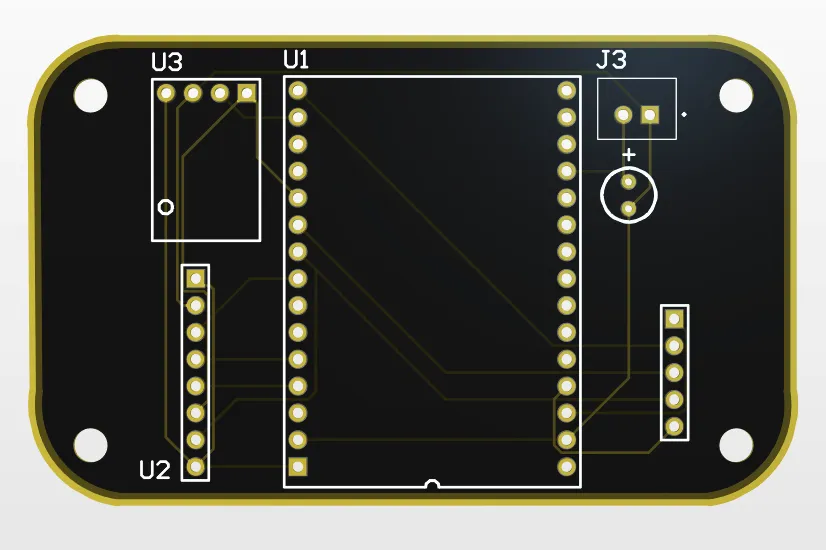
A 3D-printed impeller rides on a small DC motor. Spun by the wind, the motor runs backwards as a generator — faster air, higher voltage. An ESP32 on a board I designed in Altium (I had it fabricated and soldered it myself) reads that voltage, shows it on a small round display, and logs it over serial so I can average it.
It only reads volts, not real metres per second. That was fine here: same sensor, same distance, inside the farm against outside it.
Testing and results
I put a fan a foot from the printed farm and took readings inside and outside the walls, five runs each way.
- Outside: about 0.64 V on average
- Inside: about 0.18 V
So the reading dropped by roughly 70% once it was inside the enclosure — which is what we were hoping to see.
What I’d change
The signal was noisy. A bare DC motor is a rough way to sense wind, and the trend line through the data was weak, so I trust the direction of the result more than the exact number. Another time around I’d calibrate it against a known wind speed, or just use a real sensor, so it reads in actual m/s. The erosion and durability tests never happened for real — a 1/10 plastic model wouldn’t wear the way the full-size farm would.
// Drawings
Schematic and stackup