// Shipped · 2024–2025
RC snowcat
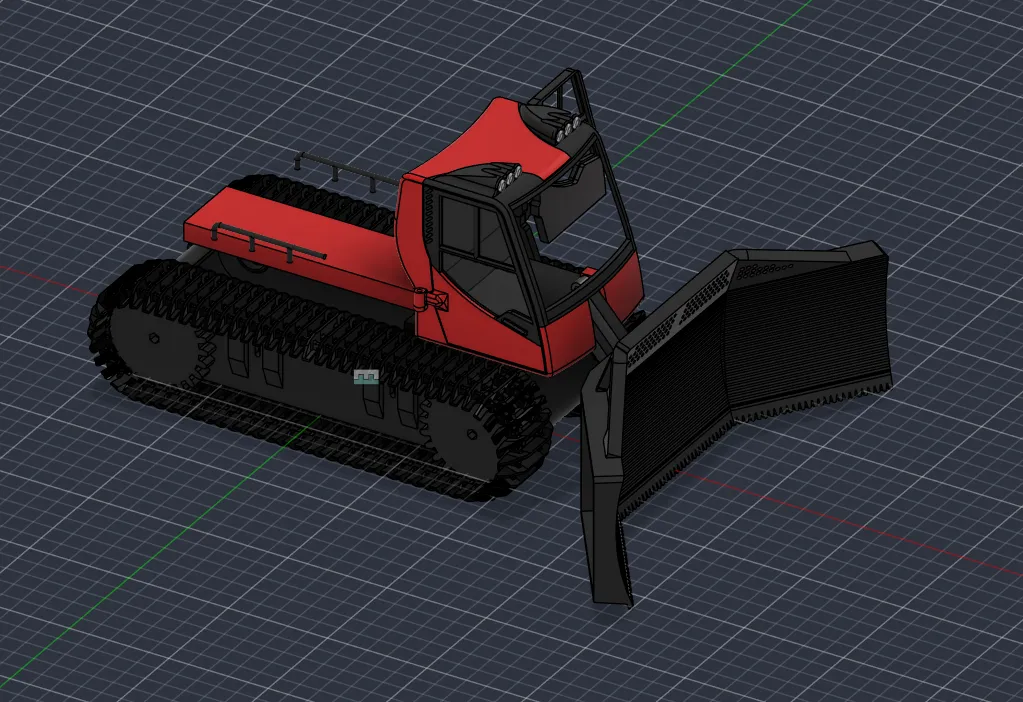
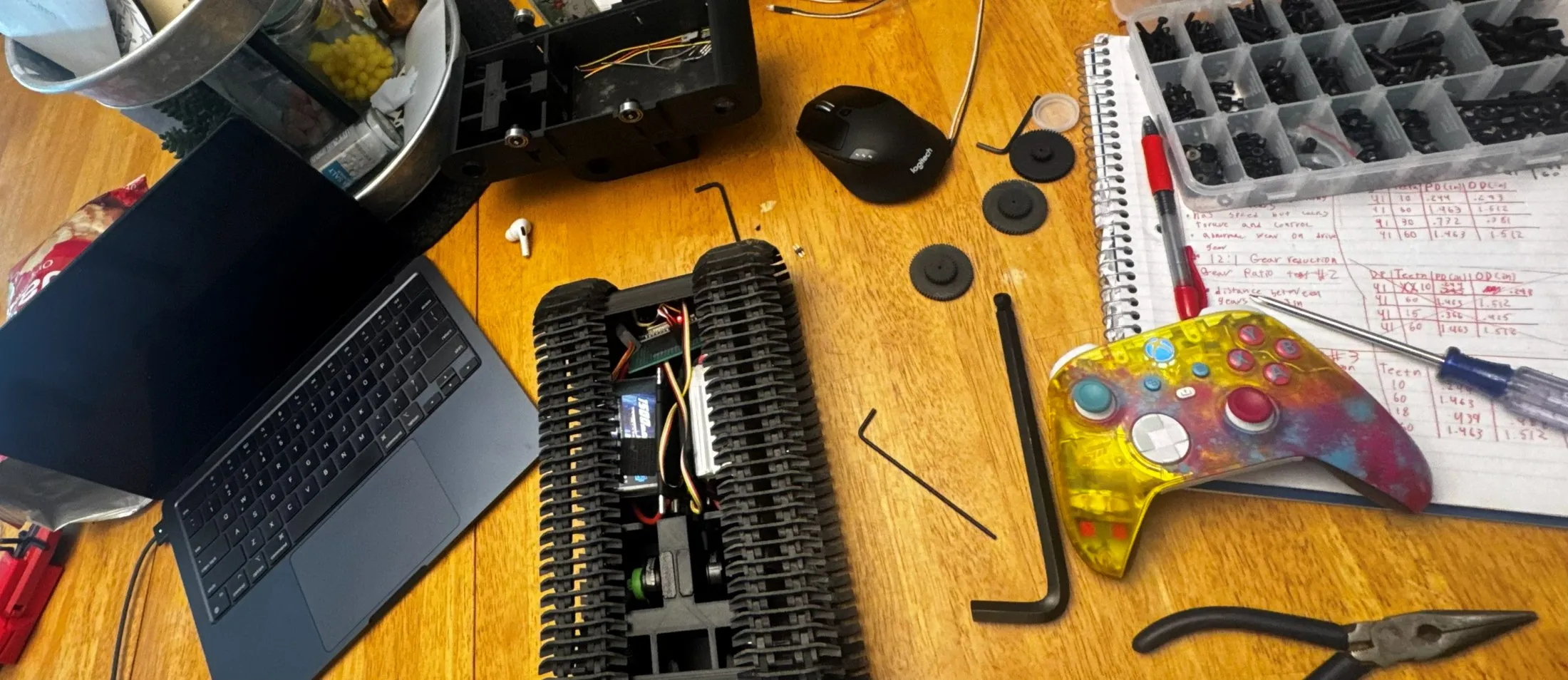
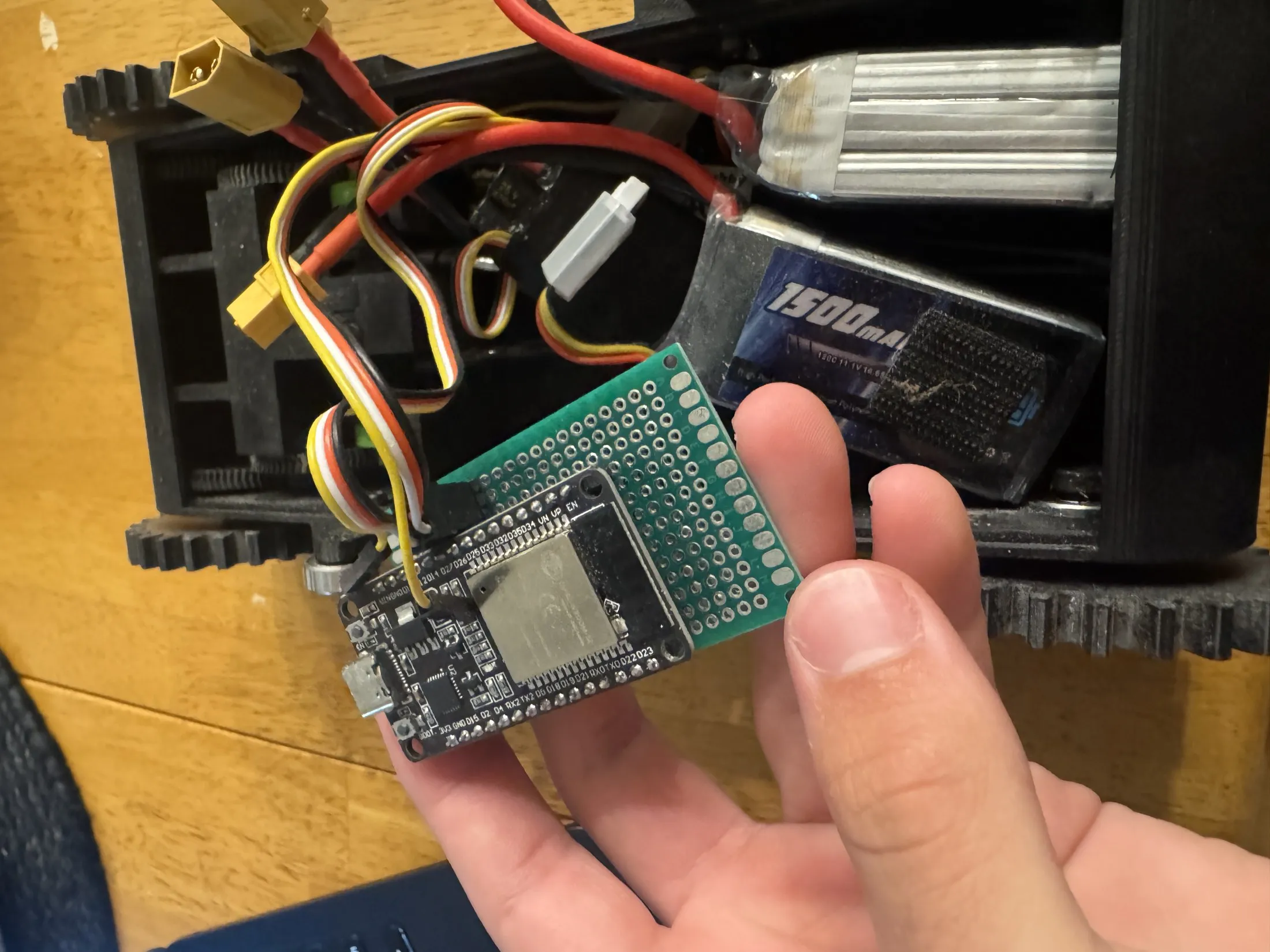
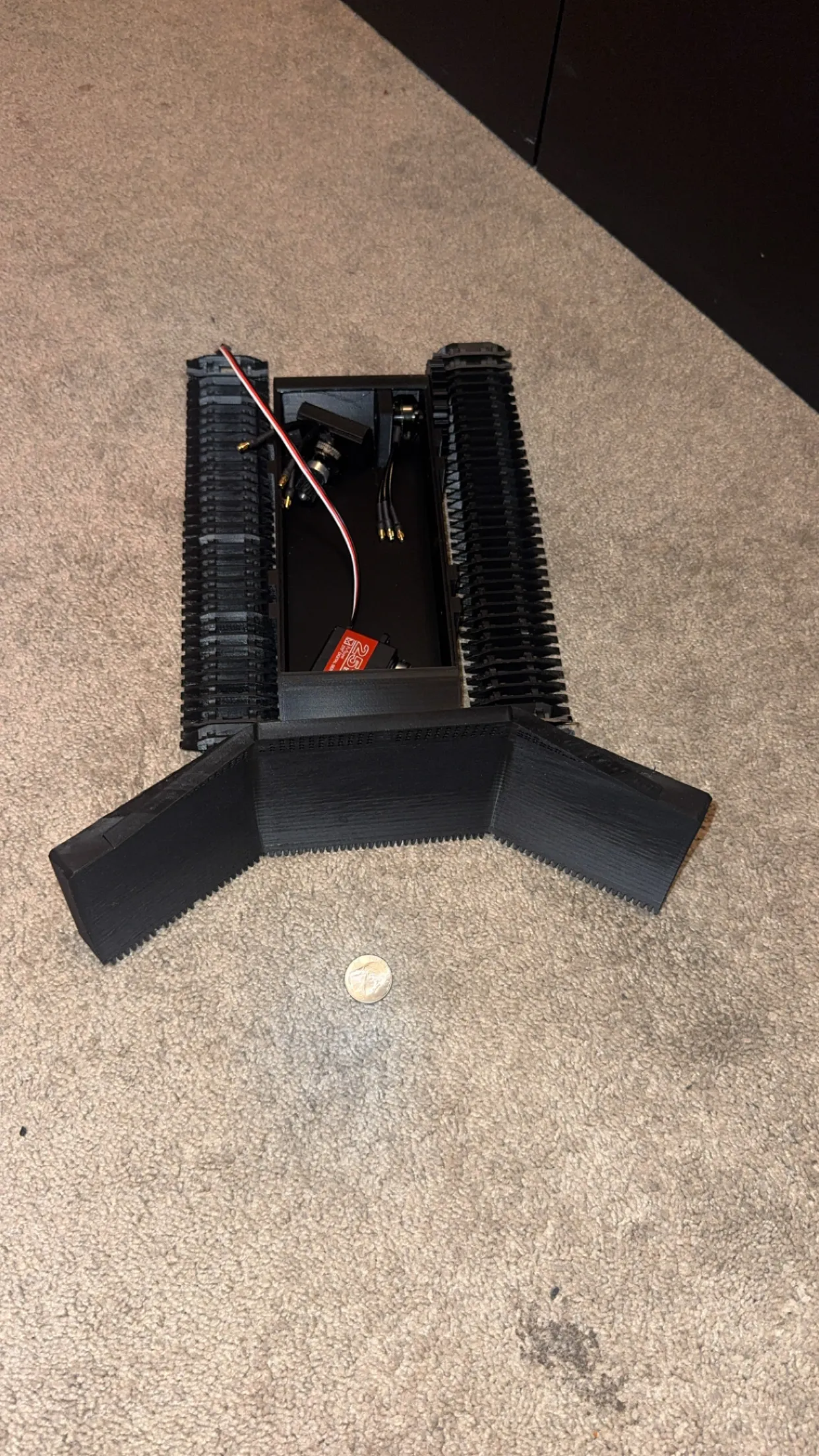
A radio-controlled snowcat I designed and built from scratch — an Xbox controller talks to an ESP32 that runs two independent ESCs for skid steer, through a custom herringbone two-stage reduction, on 3D-printed tracks. Body modelled on a Pisten Bully 600.
What it is
A radio-controlled snowcat — a tracked vehicle I designed and built from the ground up, loosely modelled on a Pisten Bully 600 groomer. Two independent brushless motors drive it like a tank (skid steer), and I run it from an Xbox controller. I called it finished once it was driving under its own power.
Drive and control
An ESP32 pairs with an Xbox controller over Bluetooth and runs two independent ESCs, one per track. Because each side is driven on its own, it steers by turning the tracks at different speeds — there’s no steering servo at all.
Each side is a brushless motor feeding a two-stage gear reduction I designed myself, built from herringbone (double-helical) gears so the load doesn’t push sideways the way plain spur gears would.
The tracks
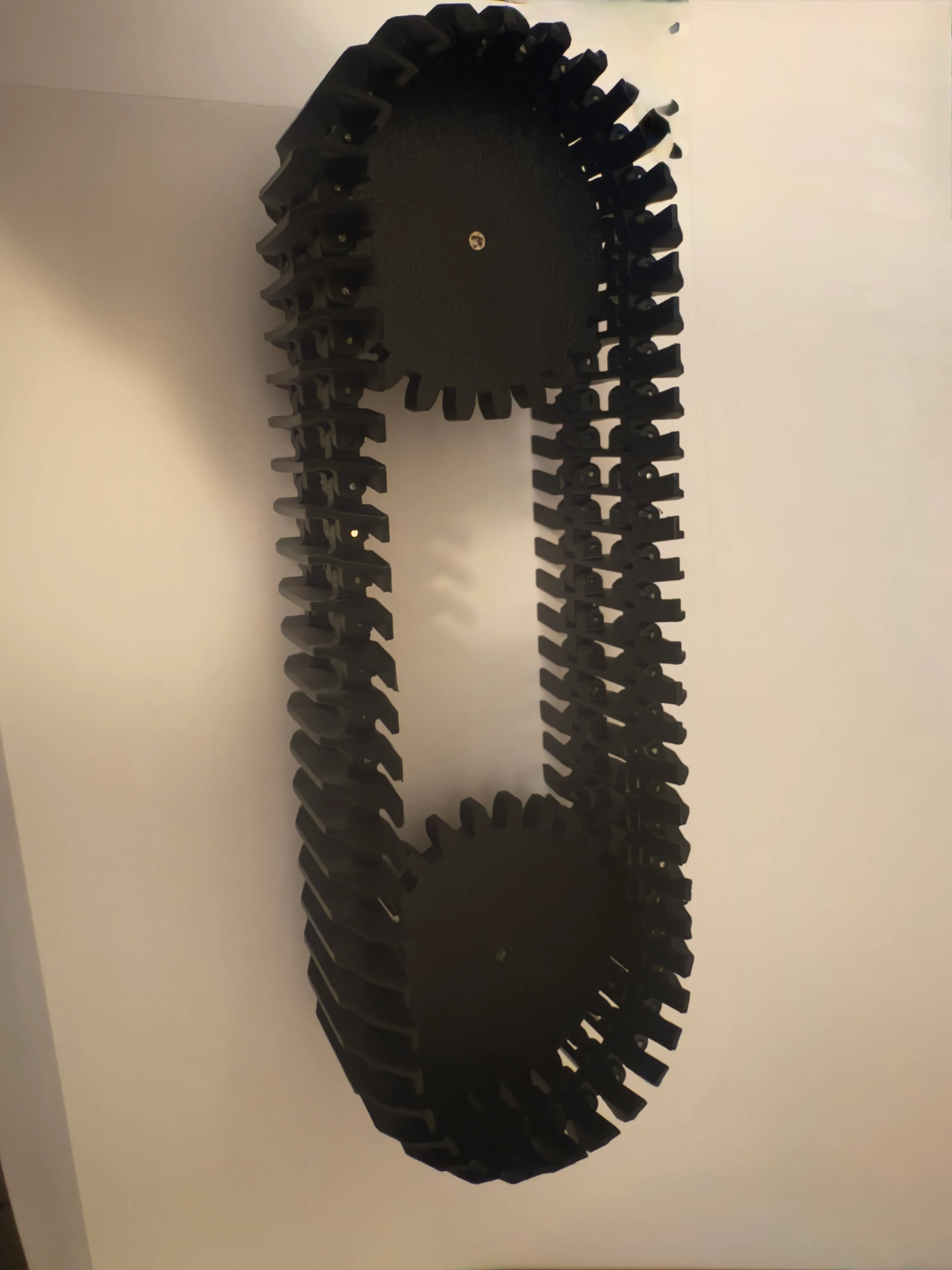
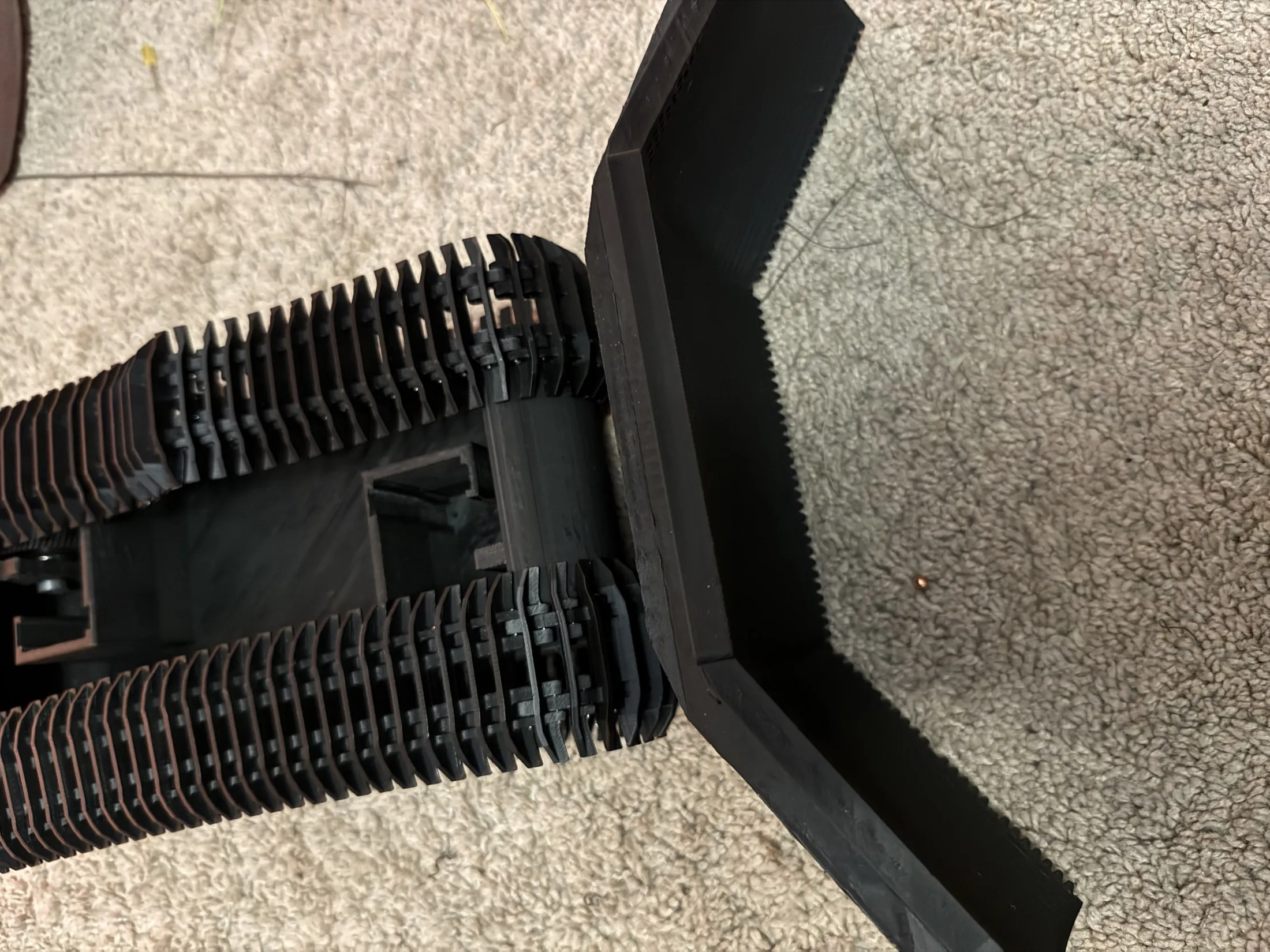
I designed the tracks from scratch too. Every link hinges on a 1 mm rod that also holds it captive, so the printed segments chain into a flexible loop that wraps the drive and idler sprockets.
The body
I modelled a full body in Fusion 360 off the Pisten Bully 600, but never printed it — once the drivetrain worked and it was driving around, I stopped there.
What went wrong
It came back to one bad call: the motor’s Kv was too high. It spun far faster than the vehicle needed, so I had to gear it way down — which left the first-stage printed gears turning at high RPM. 3D-printed plastic doesn’t hold up to that: a gear lasted maybe a couple of hours of hard driving before the teeth wore out. ABS did a little better than PLA, but not enough to fix it.
I shelved it rather than rebuild. Doing it properly meant lower-Kv motors and a reworked drivetrain — real money — and the tracks needed a second version regardless: debris would work up into the sprocket and jam or snap them. A v2 would start with slower motors and a track-and-sprocket design that sheds dirt instead of catching it.