// Shipped · 2026
Reflow oven controller
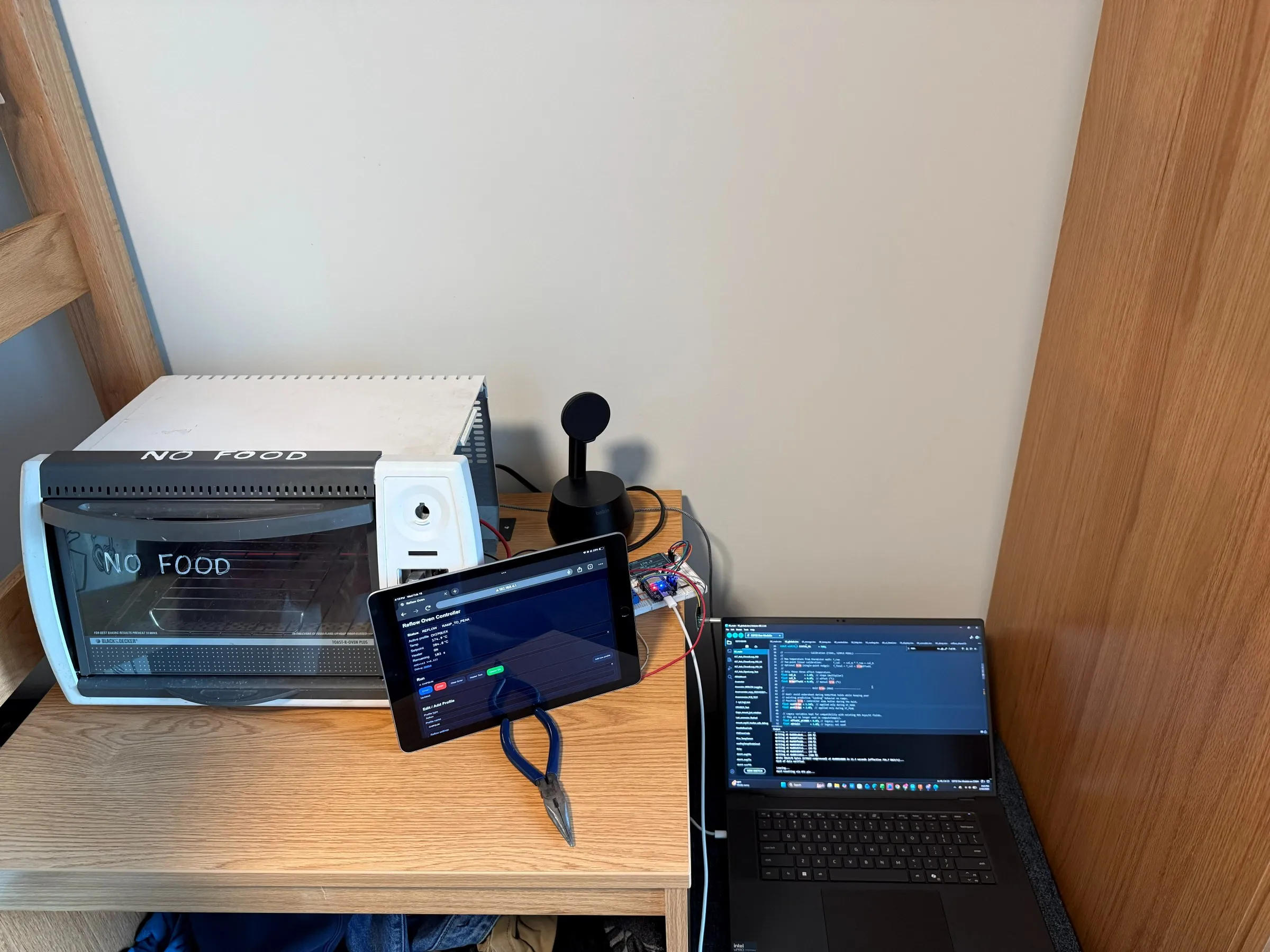
Converted a toaster oven into a controlled reflow oven driven by an ESP32, with a thermocouple, local LCD and encoder, and a web interface for profile control. Brought board assembly in-house instead of waiting a week on an assembly house.
What it is
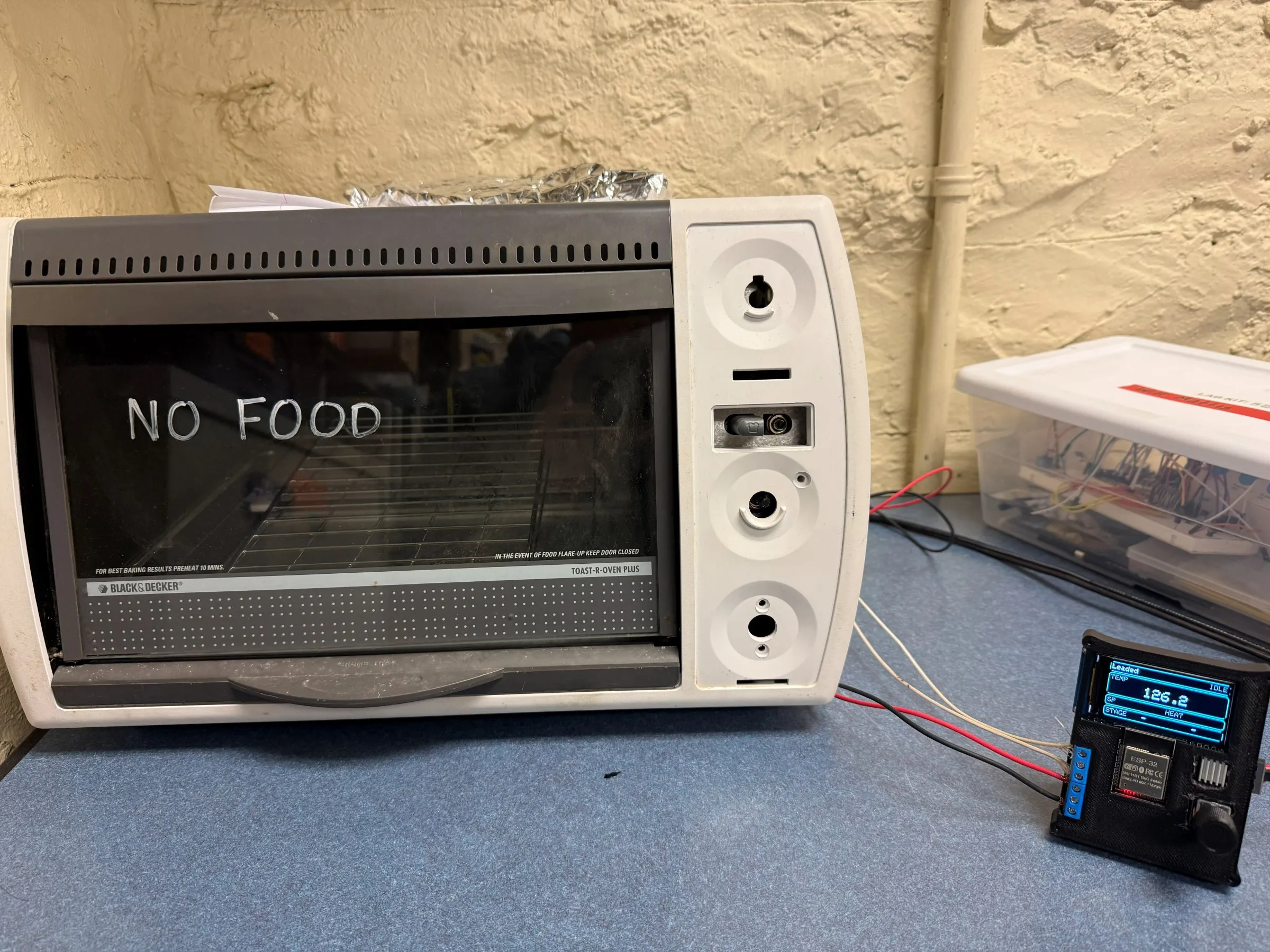
A Black & Decker Toast-R-Oven Plus that no longer makes toast. It runs solder reflow profiles under closed-loop control from an ESP32, and the words NO FOOD are written on the glass in marker so nobody in the lab makes a mistake about that.
The team designs its own boards. Without reflow, every assembly is either hand-soldered or sent out, and a design change costs a week of waiting. This puts board bring-up back inside our own schedule.
How it works
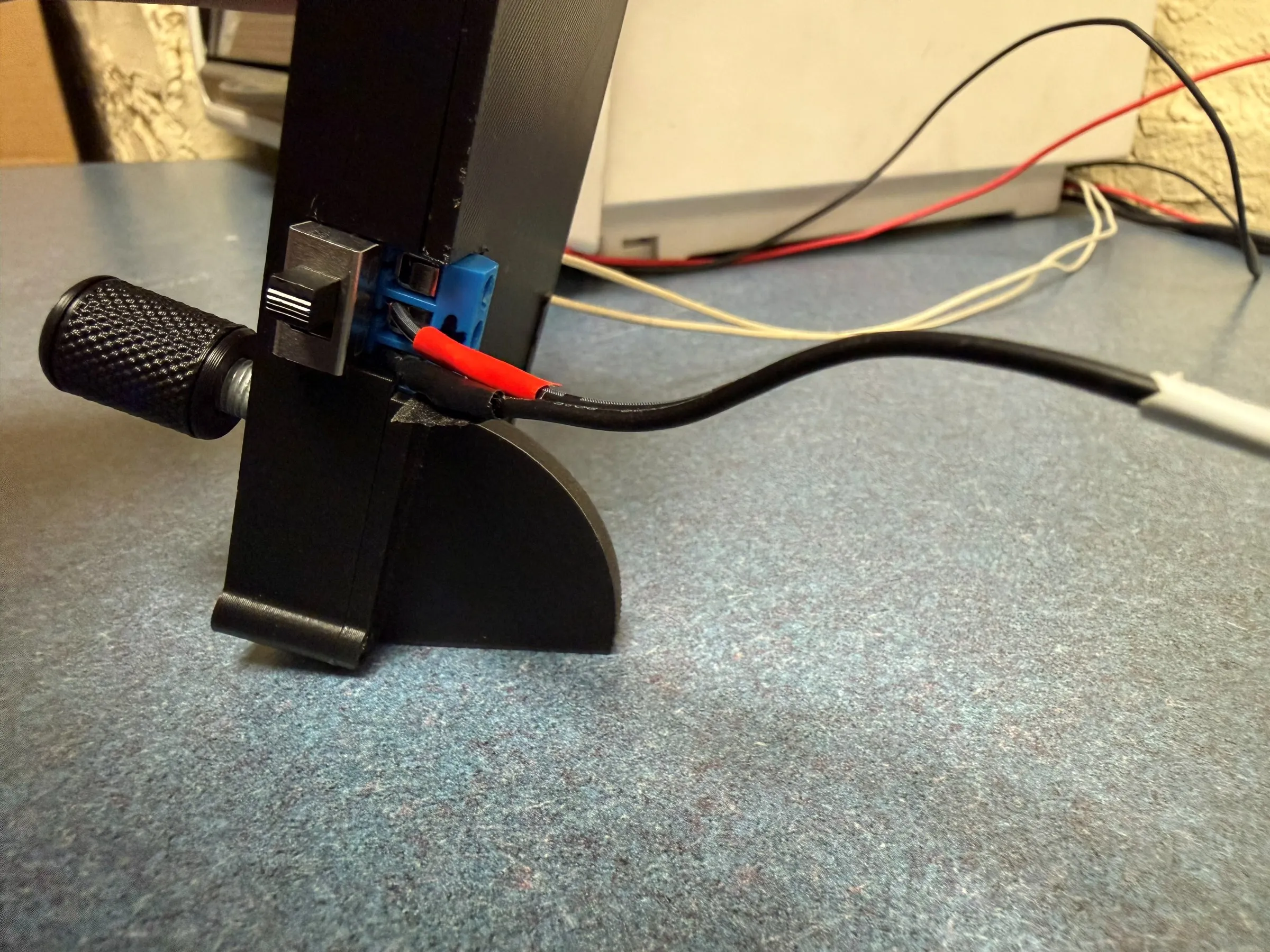
The controller lives in a printed enclosure beside the oven. It carries an ESP32, a colour LCD, a rotary encoder and a rocker switch, with screw terminals for the heater and thermocouple lines and a strain-relieved mains cable.
The LCD shows what matters mid-run and nothing else: the active profile, measured
temperature, setpoint, and which stage the run is in. In the photo above it is sitting at
126.2 °C in HEAT, part-way into the Leaded profile.
There are two ways to drive it. The encoder and LCD work standing at the oven with gloves on. The ESP32 also serves a web interface on the local network, which is where profiles get created and edited — a profile graph, the current stage and setpoint, and controls for run, stop, clear error and heater test. Editing a curve is much easier on a tablet than on a rotary encoder, and being able to watch a run from the bench across the room is genuinely useful.
Thermocouple placement
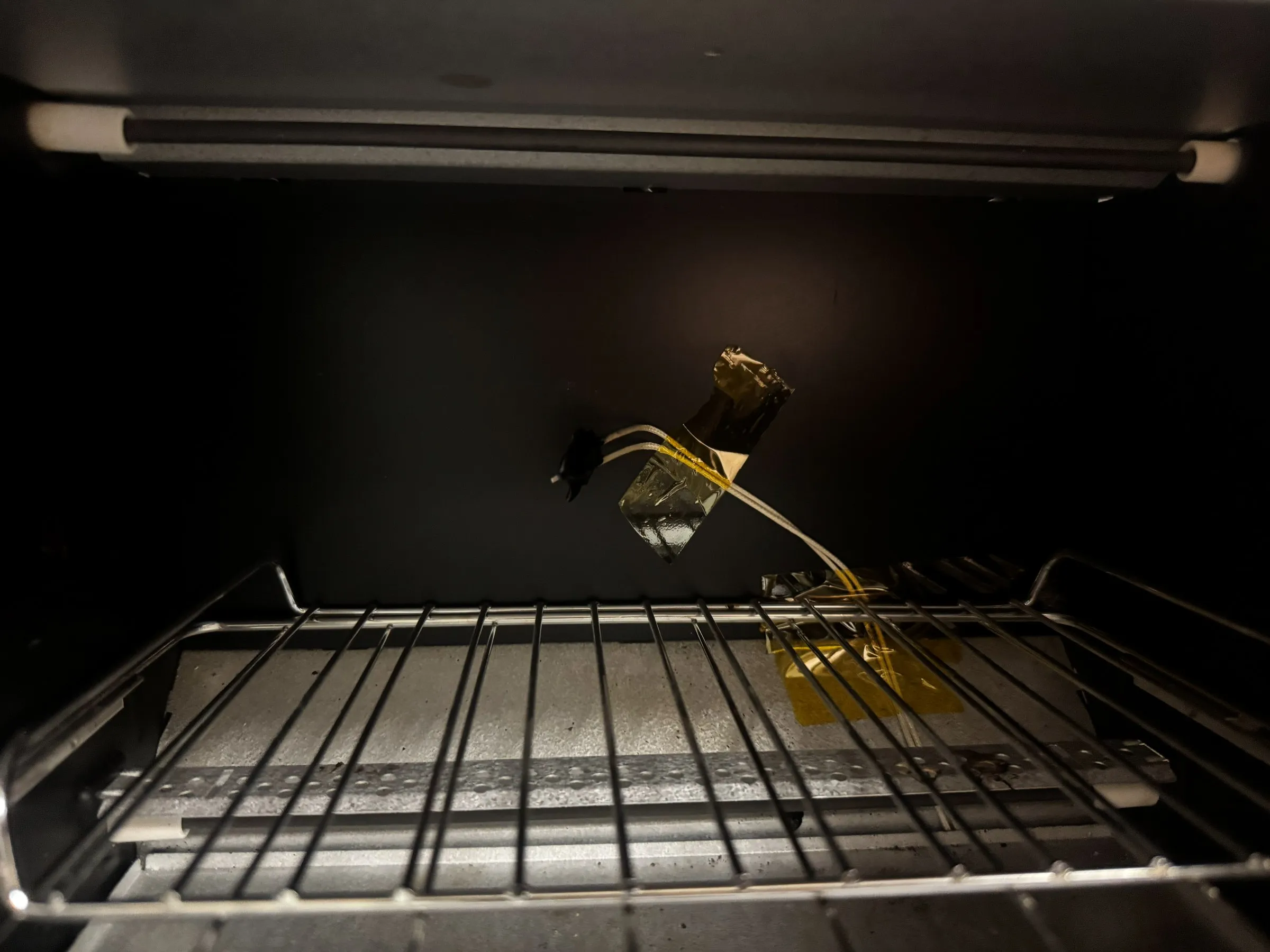
The thermocouple comes through the rear wall of the oven and is held with Kapton tape so the bead sits just above the rack, in the air the boards are actually in, rather than against a wall or touching metal. Where this sensor sits changes every number the controller sees, so it is the part of the build that most affects whether a profile means anything.
What went wrong
Results